
 by
by 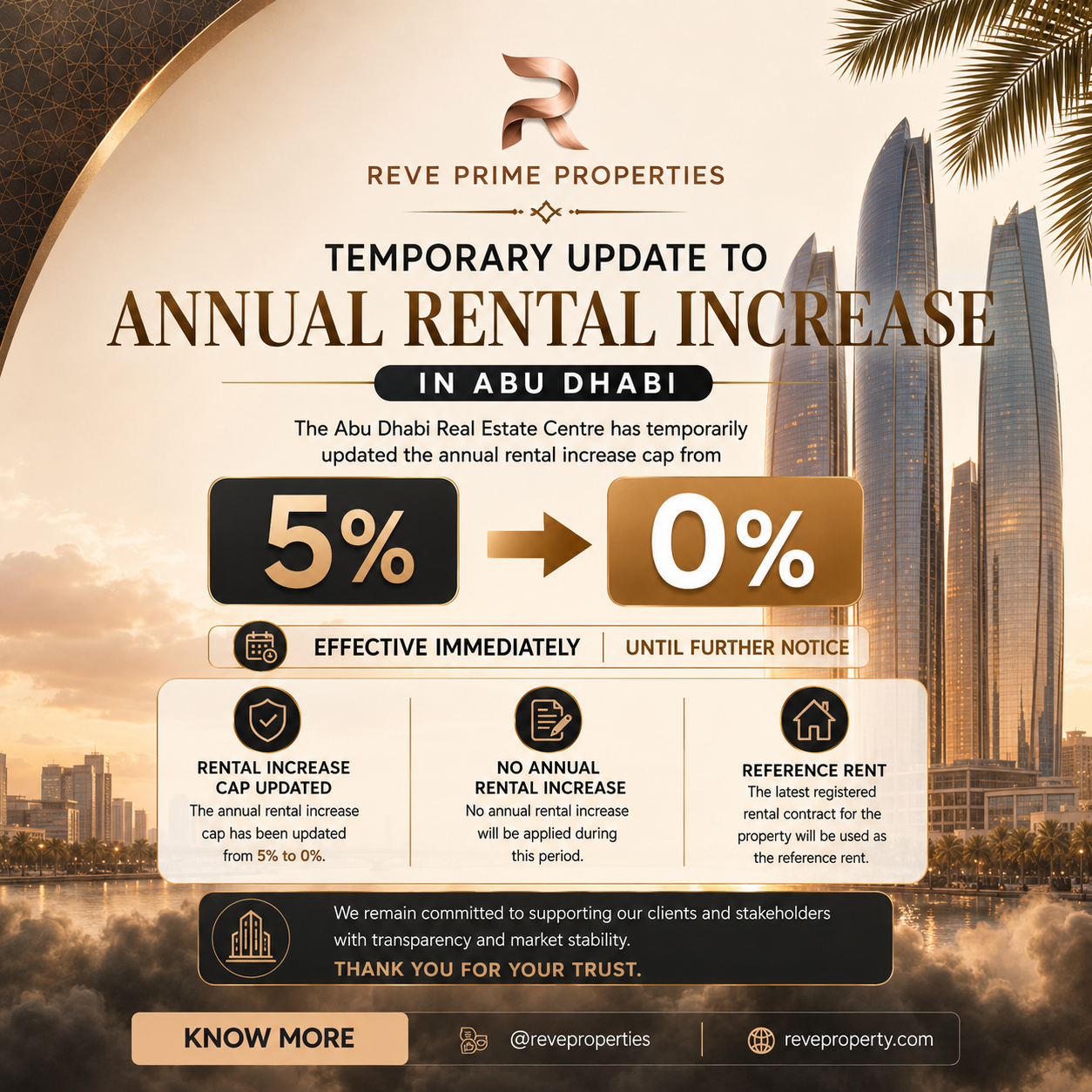
The Abu Dhabi rental market just experienced a major regulatory shift. In a move to boost market stability and protect residents, the Abu Dhabi Real Estate Centre (ADREC) announced a temporary update to the emirate’s annual rental increase cap—slashing it from 5% down to 0% effective immediately.
This temporary freeze means that landlords cannot increase rent upon renewal until further notice. Whether you are a tenant trying to budget for the coming year or a property owner managing an investment portfolio, here is exactly what this landmark decision means for you.
At a Glance: The Key Takeaways
- The New Cap: Updated from 5% to 0%.
- Timeline: Effective immediately and valid until further notice.
- The Baseline: The rental value in your latest registered contract serves as the “Reference Rent” for renewals.
What This Means for Tenants
For residents across the emirate, this update brings immediate financial relief and peace of mind. Rent is typically the largest fixed expense for families and professionals, and a 0% cap eliminates the stress of annual negotiation.
Major Benefits:
- Predictable Budgeting: You can renew your lease knowing your housing costs will remain exactly the same.
- Reduced Cost Pressure: No sudden rental spikes means more financial breathing room for savings or other living expenses.
- Long-Term Planning: Families and individuals can settle into neighborhoods with greater confidence, knowing they won’t be priced out next year.
What This Means for Landlords & Investors
While a rent freeze initially sounds restrictive for property owners, the policy is designed to stabilize the broader ecosystem. In real estate, consistency often beats volatility.
Strategic Advantages:
- Higher Tenant Retention: Tenants are far more likely to renew their leases when prices are stable, saving landlords the hassle of marketing a property.
- Zero Vacancy Risks: Finding a new tenant can take weeks or months. Keeping an existing tenant ensures an uninterrupted, reliable stream of rental income.
- Lower Turnover Costs: Every time a tenant moves out, landlords incur costs for deep cleaning, repainting, and agency commissions. Long-term tenancies eliminate these recurring drains on your ROI.
Understanding the “Reference Rent” Policy
To prevent confusion, ADREC has introduced a transparent framework for calculating renewals. The rental value recorded in your most recently registered contract (via the Tawtheeq system) will be adopted as the official Reference Rent. Landlords cannot bypass the 0% cap by trying to benchmark the renewal against arbitrary “market rates” in the same building.
The Big Picture: Why Now?
This initiative is part of Abu Dhabi’s broader strategy to position itself as one of the world’s most attractive cities for global talent and foreign investment. By prioritizing market transparency and fairness, the government is building a highly sustainable real estate ecosystem that protects consumers while maintaining healthy, predictable conditions for investors.
Next Steps for Readers
- Tenants: Check your current tenancy contract expiration date. When your landlord sends a renewal notice, ensure it reflects the new 0% increase rule.
- Landlords: Review your portfolio timeline and adjust your financial forecasts. Focus your strategy on tenant satisfaction and property maintenance to secure long-term occupancy.
Join The Discussion